
BEYOND THE DIAGNOSIS: The Story of a Lupus Warrior
By Doreen Ndanu

What do you do when your own body becomes a battlefield, your dreams seem distant, and the people you expect to understand you turn away? For Phyllis Ng'ang’a, living with lupus has meant confronting pain, financial struggles and moments of self-doubt. Yet, beneath the challenges lies a young woman determined to rise above her circumstances, pursue her dreams and turn her pain into a source of hope for others. Her story is not just about living with an illness; it is about the courage to keep going when giving up seems easier.
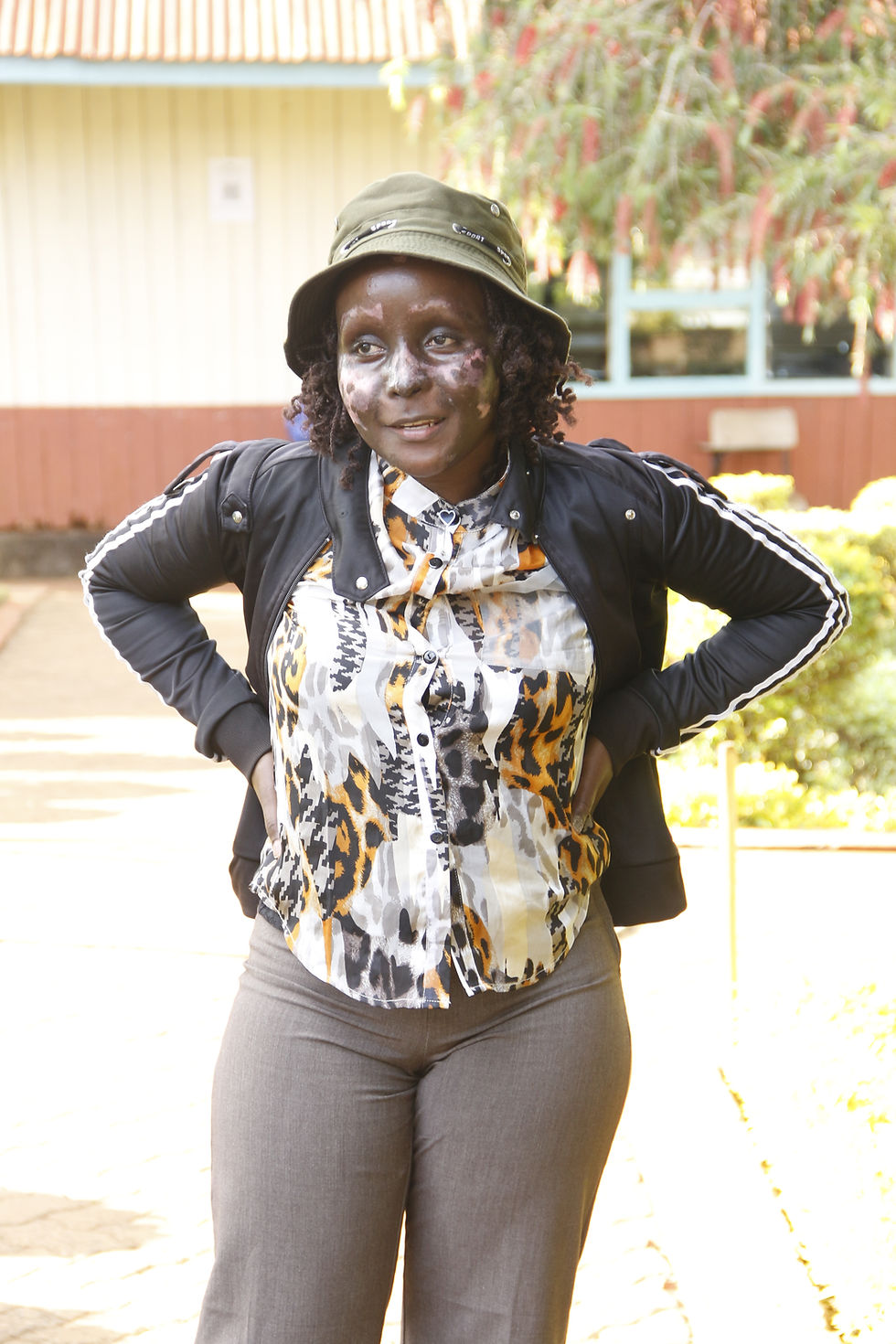
At first glance, Phyllis Ngang’a is just like any other university student with dreams, ambitions and a future she hopes to build. But behind her quiet determination lies a story of pain, resilience and a battle that has tested her in ways many people may never understand. A former student at Chuka University who pursued a Bachelor of Science in Mathematics, Phyllis is more than a young woman living with lupus. She is a fighter who has learned to find strength even on the days when life feels unbearably heavy.
Phyllis describes herself as kind, hardworking and ambitious. Her dream is to build a successful career as a data analyst, a goal she continues to hold on to despite the challenges that come with her condition. For her, lupus may have changed the course of her life, but it has not taken away her desire to succeed.
A Diagnosis That Changed Everything
Phyllis’ journey with lupus began in 2012, when she was still young and had little understanding of what the condition meant. At the time, she did not know what lupus was, how it affected the body or what living with it would demand of her. Like many people facing a new diagnosis, she had more questions than answers.
As the years went by, the reality of her condition slowly unfolded. There were moments when the physical pain became difficult to bear and the emotional weight even harder to explain. Fatigue, headaches and joint pain became part of the challenges she had to navigate. Sometimes, the struggle went beyond the physical symptoms. She found herself questioning her worth and wondering why she had to go through so much at such a young age.
There were moments when she felt overwhelmed, when accepting herself seemed harder than facing the illness itself. She struggled with her self-esteem and, at her lowest points, almost gave up. Yet, somewhere within her, a small voice kept reminding her that her story was not over.
The Cost of Living with Lupus
Living with a chronic illness requires more than courage; it also demands financial resources, patience and a strong support system. For Phyllis, the cost of managing lupus has been one of the most difficult parts of the journey.
Medical consultations, tests, hospital visits and medication can be expensive. She estimates that the cost of treatment has reached approximately KSh 200,000, a figure that illustrates the financial burden associated with managing her condition. Such expenses can be particularly difficult for a student trying to pursue an education while dealing with a health challenge that does not simply disappear.
Her academic journey has also had its share of interruptions. During her second year at university, she developed a problem with her leg that affected her studies and made it difficult for her to attend classes. For a student working towards a degree, missing lessons can mean falling behind on assignments, examinations and the everyday rhythm of university life.
Still, Phyllis has continued to hold on to her ambitions. Her dream of becoming a data analyst remains a reminder that there is more to her life than hospital visits and difficult days.
When Stigma Hurts More Than Words Can Say

Beyond the pain and financial strain, Phyllis has also had to deal with the misunderstanding that often surrounds chronic illnesses. Some people have discriminated against her because of her condition, leaving her to face not only the challenges of being unwell but also the hurt of being treated differently.
When a person is already struggling to accept a difficult reality, rejection can deepen the wounds. For Phyllis, learning to love herself has been an important part of the healing process. She has come to understand that her condition does not define her intelligence, her character or her potential.
Lupus is a chronic autoimmune disease in which the immune system mistakenly attacks the body's own tissues. It can affect different parts of the body, including the skin, joints, blood and kidneys. Its symptoms vary from one person to another, and the condition is not contagious. Understanding these facts matters because misinformation can fuel stigma and make life even harder for those affected.
Phyllis’ experience is a reminder that people living with chronic illnesses need understanding rather than judgment. They need to be seen as whole human beings, with abilities, hopes and dreams, rather than being reduced to their medical conditions.
The People Who Helped Her Keep Going
Although her journey has not been easy, Phyllis has not walked it alone. Her parents have remained a steady source of encouragement since her diagnosis in 2012. Through the difficult seasons, they have continued to stand by her, reminding her that she is loved and that her life is worth fighting for.
Her siblings have also been part of her support system, offering the kind of companionship that can make a difficult day feel a little lighter. At university, friends who understood her struggles helped her feel accepted and encouraged her not to abandon her dreams.
One friend, Brenda, holds a special place in her story. Brenda encouraged Phyllis to accept herself and helped her through some of her difficult moments. Rather than treating her as a burden, Brenda offered friendship and reassurance when she needed them most.
Phyllis also acknowledges the encouragement she received from people at Chuka University, including individuals who helped her build confidence and find the courage to keep moving forward. Their support helped her discover that speaking about her experiences was not a sign of weakness but an opportunity to connect with others.
Turning Pain into Purpose
One of the most significant changes in Phyllis’s life has been her decision to share her story. Through social interaction and speaking openly about her experiences, she has gradually become more confident in herself and in front of other people.
Her role as a career ambassador at Chuka University gave her opportunities to interact with others and express herself more freely. These experiences helped her realise that her voice could reach people beyond her immediate circle.
By sharing her journey, Phyllis hopes to encourage those facing similar challenges. She wants people struggling with chronic illnesses to understand that a diagnosis does not have to become the end of their dreams. Her story does not suggest that living with lupus is easy or that determination can eliminate the physical and financial difficulties associated with the disease. Instead, it shows that a person can continue to pursue meaning and purpose while navigating circumstances they did not choose.
Her message is simple: do not give up on yourself. The difficulties you face today should not convince you that you have no future. Sometimes, moving forward means taking one small step at a time, accepting help and learning to be kinder to yourself.
A Warrior Still Writing Her Story
Phyllis' journey is not a story of a woman who has defeated every challenge. It is the story of someone who continues to live, dream and hope while facing an illness that has changed many aspects of her life.
She remains ambitious, holding on to her dream of becoming a data analyst and determined to make something meaningful out of her experiences. Her strength is not found in pretending that she never feels pain or fear. It is found in acknowledging those feelings and choosing, again and again, not to let them define her entire life.
Perhaps the greatest lesson from Phyllis’s story is that courage does not always look dramatic. Sometimes, it is found in waking up on a difficult morning, attending a class when possible, accepting support from a friend or daring to believe in a future that still feels uncertain.
For Phyllis, lupus is part of her story, but it is not the whole story. Beyond the diagnosis is a young woman with ambitions, a family that stands beside her, friends who believe in her and a voice that deserves to be heard.
She is still learning, still growing and still reaching for her dreams. And in that continued determination lies the true meaning of being a lupus warrior.


Comments