
Chuka University Marks Successful Conclusion of Climate Justice Moot Court Competition
By Sallo Gobana
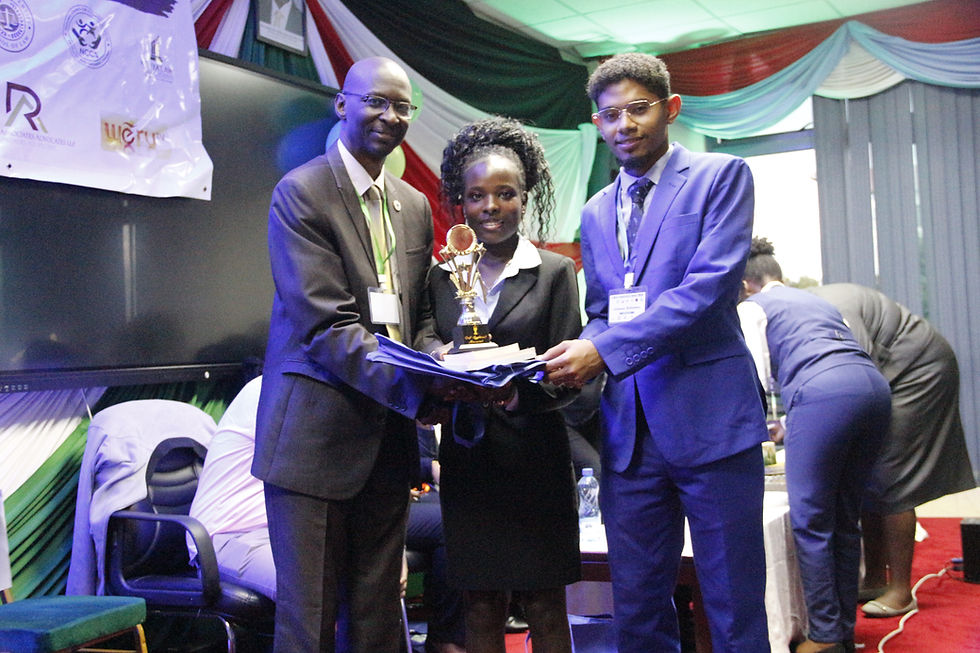
Chuka University successfully concluded its regional moot court competition on Friday, October 9, 2026 , Organized under the CJMCC steering committee , the prestigious academic and legal event brought together law students from various Kenyan universities to debate legal empowerment for children and youth on climate and environmental justice .
The intense rounds of simulated courtroom advocacy culminated in a high-profile awards and recognition ceremony. The closing event brought together students, judges, panelists, advocates, and university representatives to celebrate the participants’ achievements and appreciate those who contributed to the success of the initiative. Beyond the competitive aspect, the forum highlighted the critical importance of practical legal training in preparing young people for competitive careers in the legal profession.
A major highlight of the closing ceremony was the announcement of the tournament champions. Team 101 from the Jomo Kenyatta University of Agriculture and Technology (JKUAT) emerged as the overall winning team. In recognition of their exceptional performance, the team members were awarded coveted internship opportunities with the National Council for Law Reporting, providing them with critical practical experience and a deeper understanding of the legal profession.
The ceremony also celebrated individual excellence, presenting distinct awards for the best female oralist, best male oralist, and best researcher. The top researcher received a professional attachment with the National Council for Law Reporting. These career-launching opportunities reinforced the competition’s commitment to bridging the gap between classroom theory and actual professional placement.
Delivering the keynote address, Meru High Court Judge Hon. Justice Githinji urged the aspiring lawyers to uphold strict professional ethics and commit to continuous learning throughout their legal careers.
"Effective legal advocacy requires honesty, thorough preparation, and the accurate presentation of facts," Justice Githinji emphasized.
He reminded the students that professional advocates must never guarantee victory to clients, as the final decision rests solely with the court. Instead, he advised them to meticulously prepare their briefs, anticipate opposing arguments, and remain adaptable to unpredictable courtroom outcomes and different possible rulings.
Justice Githinji added that moot court competitions transcend winning trophies, serving as vital training grounds to build confidence, sound judgment, and ethical responsibility ahead of actual legal practice. He encouraged participants to actively learn from feedback, continuously assess their performances, and refine their public speaking and presentation skills.
The event drew extensive support from the legal and academic communities, bringing together an array of legal professionals, university community members, and event organizers. A distinguished panel of judges and legal experts volunteered their expertise and time to evaluate the participants, ensuring they were exposed to rigorous professional evaluation, diverse legal perspectives, and the exacting standards expected in modern advocacy.
Sponsored primarily by UNICEF, the initiative was made possible through key institutional partnerships. Core collaborators included the Judiciary, the National Council for Law Reporting, Chuka University, and the Chuka University School of Law.
The event also received vital support from community organizations and legal firms, including the Moot Society, Wakili wa Watoto and its patron, Roba and Associates, Gwantai Associates, Weru TV, and Margaret LLP.
Ultimately, the closing ceremony marked more than just the end of a competitive tournament. It celebrated learning, teamwork, and professional growth while encouraging the next generation of legal practitioners to embrace ethical advocacy, strengthen their research capabilities, and continue pursuing excellence within the legal profession.


Comments