
UNICEF Mobilises Kenyan Law Students to Champion Children’s Rights and Climate Justice
By Sallo Gobana

On Friday, October 10, 2026, UNICEF urged Kenyan law students at Chuka University to use their legal knowledge to protect vulnerable minors and champion climate justice, launching a nationwide educational initiative to turn future lawyers into active community advocates against child rights violations.
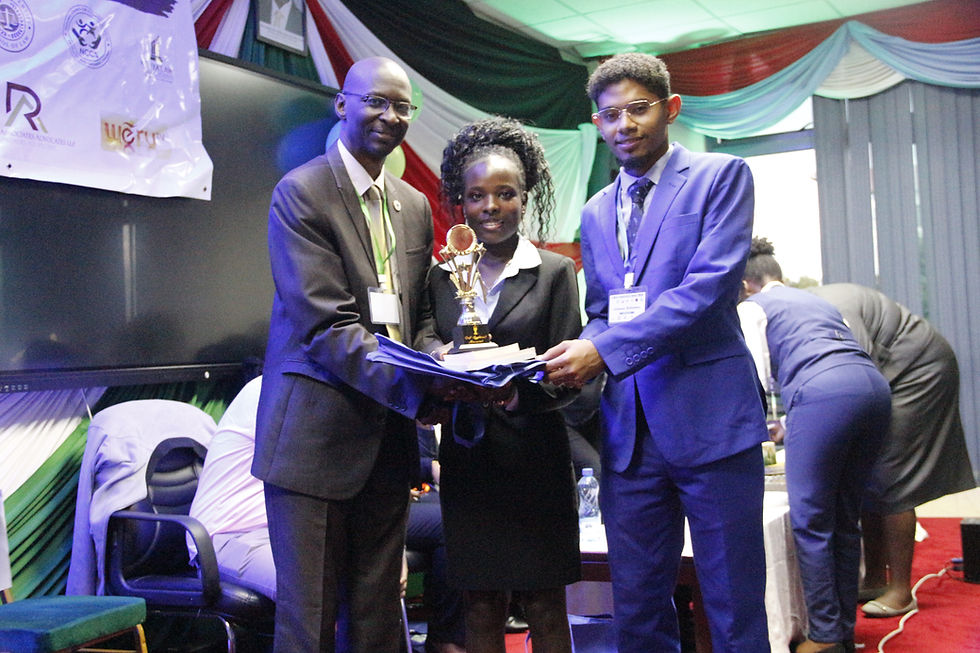
Speaking at the Chuka University School of Law during the inaugural Child Justice Moot Court Competition, Roseline Wambui Kabata, a UNICEF Child Protection Officer and Advocate of the High Court of Kenya, emphasized that the responsibility to defend vulnerable children should begin while students are still in school. She argued that legal knowledge should not remain confined within courtrooms and lecture halls, but must be used actively to help children and communities understand their rights and seek justice.
The call to action is part of a broader three-year project spearheaded by UNICEF, titled Legal Empowerment for Children and Youth on Climate Justice. The initiative seeks to equip young people with a deep understanding of environmental justice and its direct connection to children’s rights. Central to this strategy is the "Wakili wa Watoto" (Children’s Lawyer) model established within law schools, which empowers university students to take their knowledge directly into primary schools, secondary schools, and the wider community.
Kabata commended Chuka University’s moot court competition for aligning closely with the project through its specific focus on equal justice, the girl child, and climate sustainability. Drawing from her own experience in law school, she noted that participating in moot courts leaves a lasting impact on students, helping them retain knowledge and articulate complex legal issues surrounding child protection far more effectively.
Looking forward, UNICEF plans to scale the initiative nationwide by partnering with all 18 law schools across Kenya, including the Kenya School of Law. The organization is currently working with justice-sector stakeholders to review environmental law curricula with the aim of incorporating a dedicated climate justice module. Additionally, UNICEF will advocate for "Children and the Law" to become a mandatory core unit in all Kenyan law faculties.
The expansion plans further include a specialized mentorship programme involving Environmental and Land Court judges for law students interested in climate and environmental law. As UNICEF extends its footprint to higher education institutions across the country, Chuka University is expected to remain a key partner in the effort to connect legal education with grassroots community awareness.


Comments